
Explaining Performance Testing Types with K6
In this article, we will have a look into the different types of performance, a critical aspect of software development often misunderstood…

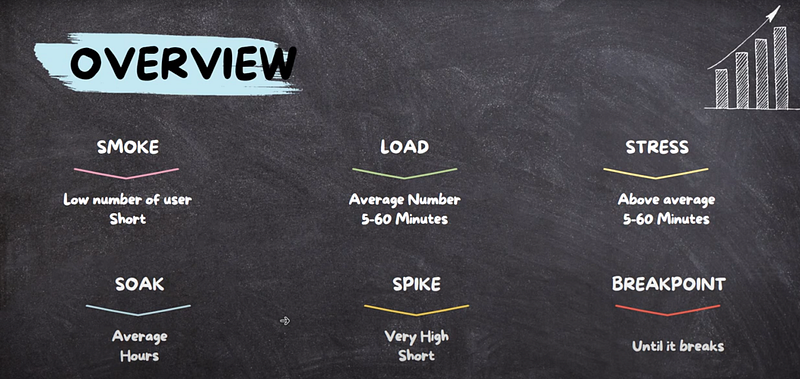
In this article, we will have a look into the different types of performance, a critical aspect of software development often misunderstood or confused with other types of testing.
We’ll explore various types of performance testing and how they contribute to ensuring the robustness and reliability of software systems.
The Importance of Performance Testing
Performance testing goes beyond merely running a script. It involves understanding different traffic patterns and creating diverse risk profiles to comprehensively evaluate system behavior under varying conditions. Let’s unravel the different types of performance testing to gain a clearer perspective.
Types of Performance Testing
Smoke Testing
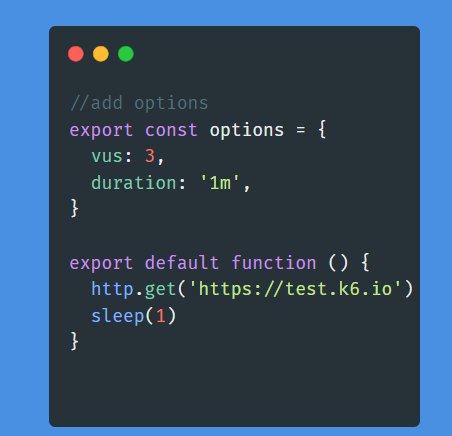
Purpose: Verify base functionality after code changes.
Characteristics: Low number of users and short duration.
Implementation: Utilize a small number of virtual users for a brief period.
K6 implementation
Load Testing
Purpose: Assess system performance under average user load.
Characteristics: Sustained load with an average number of users.
Implementation: Simulate average usage over a specified duration.
K6 implementation
Stress Testing
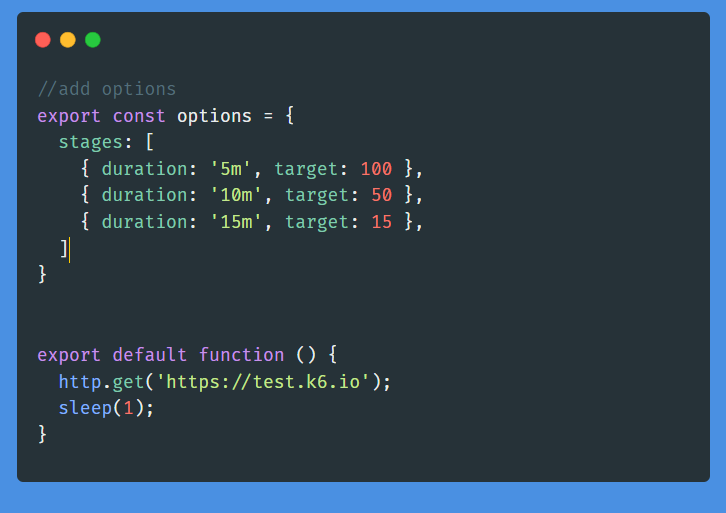
Purpose: Evaluate system behavior under above-average load.
Characteristics: Testing system limits with a higher user load.
Implementation: Gradually increase user load to stress system capabilities.
K6 implementation
Soak Testing
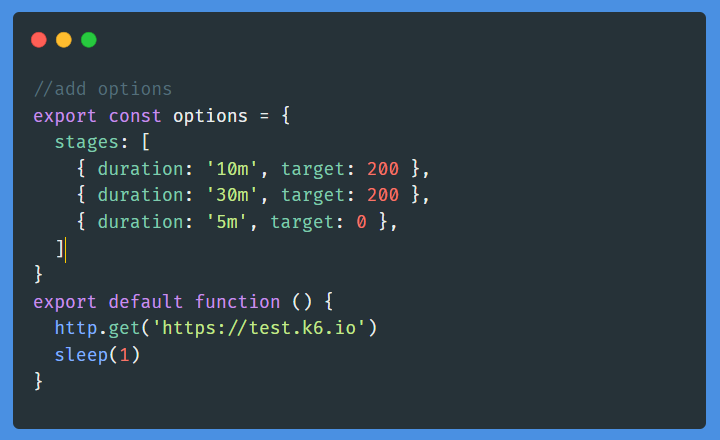
Purpose: Examine system performance under prolonged, continuous use.
Characteristics: Extended duration with a consistent user load.
Implementation: Maintain a stable user load over an extended period.
K6 implementation

Spike Testing
Purpose: Assess system response to sudden spikes in user traffic.
Characteristics: Rapid increase and decrease in user load.
Implementation: Simulate abrupt user surges followed by rapid decline.
K6 implementation
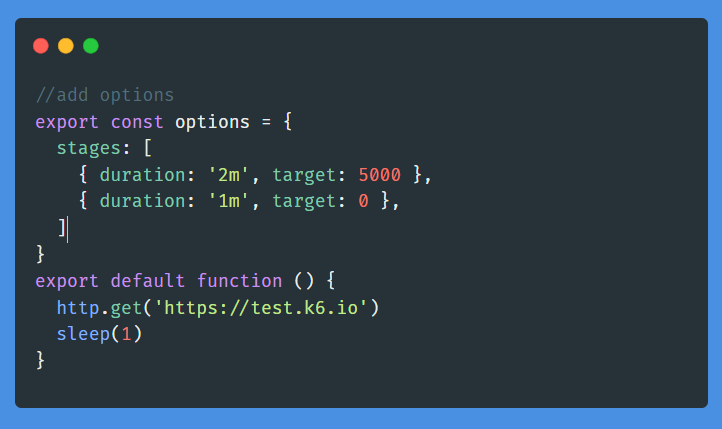
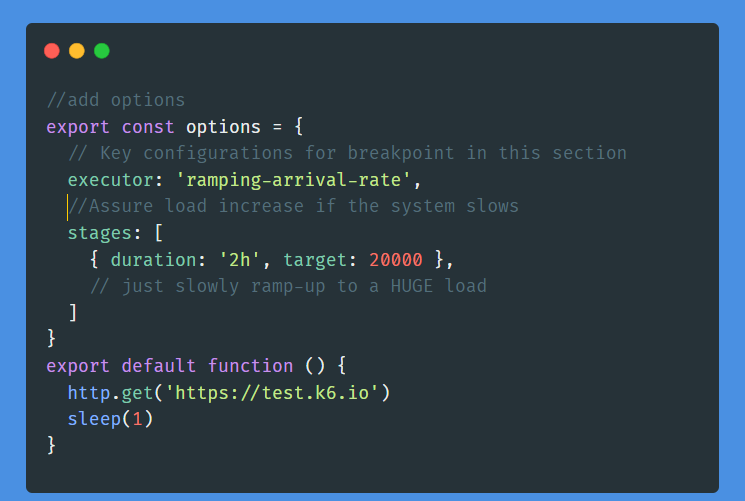
Breakpoint Testing
Purpose: Determine system limits by testing until failure.
Characteristics: Testing to identify the breaking point of the system.
Implementation: Gradually increase user load until system failure.
K6 implementation
Instead of a Conclusion
In conclusion, performance testing is a multifaceted process crucial for ensuring software reliability and scalability.
By understanding the different types of performance testing and implementing them effectively using tools like k6, developers can identify and mitigate potential issues before they impact end-users.
Remember, rest, test, and strive for continuous improvement in your software testing endeavors.